
Pop Quiz!
Who will you work with:
- A competent but mean manager or
- An incompetent but likeable manager?
If you have options in life, you’ll choose neither.
And therefore, you should develop into a leader who is both competent and humane.
But is that enough?
In my earlier post, I busted some myths around what makes a CEO. In this post I delve into the behaviours that make the foundation of a impactful leader.
If you think about leaders who you look up to, they will demonstrate one or more of the below behaviours, in varying degrees. (Not to be confused with CEO Stereotypes explained here)
- They win, consistently.
- They create a respectful workplace environment while holding themselves and their teams accountable to utmost standards.
- They are decisive and offer clarity.
- Finally, when things don’t go as planned, they adjust and adapt with agility.
The above are what Elena and Kim call, “The 4 CEO Genome Behaviours”, in their book, “The CEO Next Door”. These are the traits that give you the foundations to win the position of a CEO and succeed at it.
Let’s dive deeper.
Decisiveness
Picture this. You are the newly minted CEO of a crumbling organisation. What you do next can either breathe life into your company or bring it to its knees (along with your career). What would be your frame of mind when deciding your strategy? If you sweat every decision, given the high stakes, you have lost the battle already.
What differentiates successful CEOs is the speed and conviction with which they will make decisions, knowing fully well, that their decisions could be wrong. The challenge in the top job is not the lack of intellectual prowess. What stumps most CEOs is the volume and speed at which they have to make decisions.
Elena and Kim offer the following principles that help CEOs make high velocity decisions
- Make complex simple – Many CEOs use simple yet sophisticated criteria that expedite decision making. E.g. Will this acquisition help us become No 1 or 2 in any market? If yes, let’s go ahead. If not, then drop it.
- Voice not Vote – In order to make informed decisions, it’s important to listen from all corners of the organisation. Let all involved parties have a voice. Let competing information surface. However, don’t wait for a consensus. Make a decision and then communicate.
- Make fewer decisions – Be vigilant about what decisions you get yourself involved with. Do not step in when the decision rights reside with others in the organisation who have the information and experience to make the decision. Empower your team to screen decisions that they bring to you.
Engage for impact
Early in my career when I was a new manager, what scared me the most was “not being liked” by my team members. I was afraid of asking my team to do anything outside of the ordinary and bordered on meekness. Till one day, I looked squarely in the mirror and asked myself, will I be willing to go through discomfort to deliver results that benefit the organisation and elevate my career. The answer was a resounding YES!.
That was the day, I treated my team to the same standards as myself. I stopped worrying about being liked and started focusing on making my team members as well as the organisation successful. Ever since then, my teams have always been by my side and my organisations have rewarded them generously.
“If you did what it takes to fully satisfy any of your stakeholder groups, you would bankrupt the company in a hurry.” – The CEO Next Door
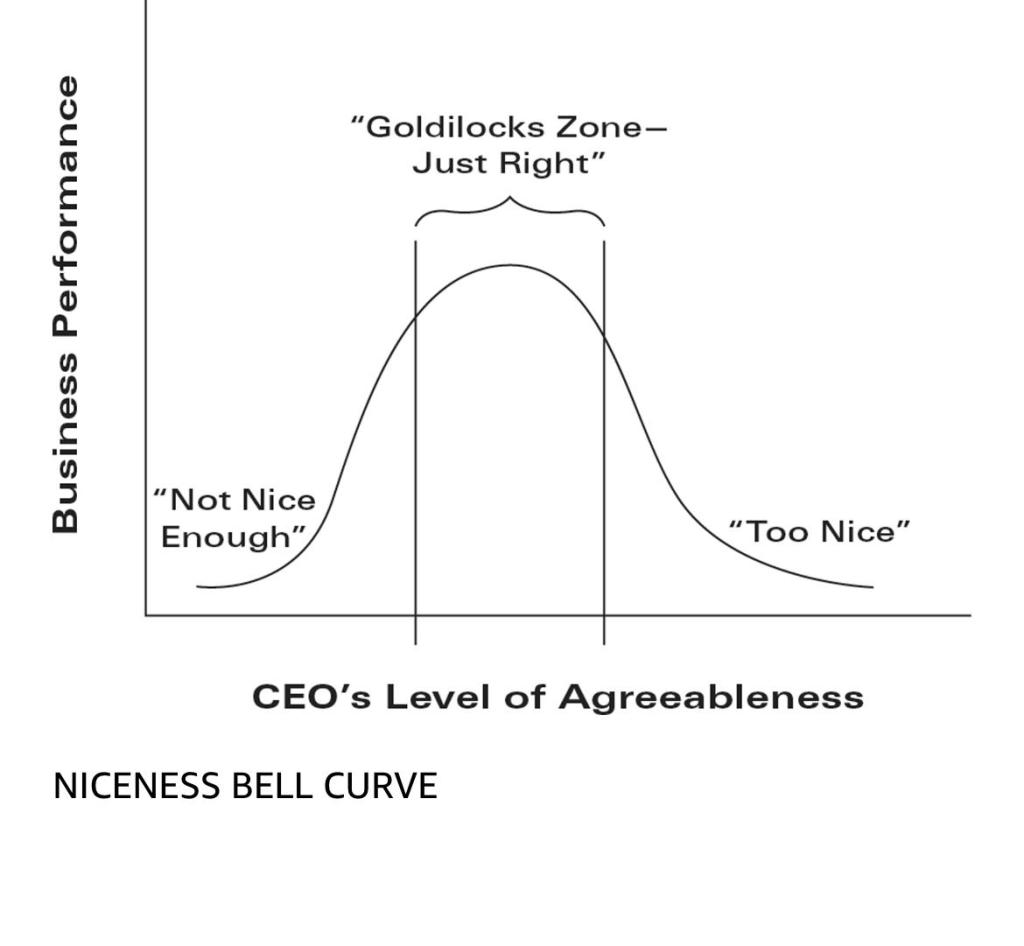
Successful CEOs engage with others for impact rather than likeability (or affinity). They understand the discomfort that comes with tough decisions but ultimately subordinate their own and other’s needs to the demands of the business. Both extremes – Too nice and not nice enough lead to disappointing results and can get a CEO fired.
Relentless Reliability
“CEOs who are known for being reliable are 15X more likely to be high performing, and their odds of getting hired are double those of everyone else.” – The CEO Next Door
Why is reliability so powerful? Leaders who are reliable create assumption among their customers, board members and staff that they will “get things done.”
It is also one of the most difficult traits to master because as a CEO you are dependent on systems and teams to drive results. If these systems and teams are not reliable, you fail. Many CEOs aren’t equipped to change or build these systems thus finding it tough to deliver in a reliable way.
Some principles that enable CEOs to rank high on reliability are as follows:
- Personal consistency
- Setting realistic expectations – implicit and explicit
- Practicing radical personal accountability and
- Embedding consistency into the organisation.
“Under Pressure you don’t rise to the occasion; you fall to the level of your training.” – US Navy’s Top Gun Fighter Pilot Academy.
Adapt Boldly
Elena and Kim’s research shows that CEOs who adapt boldly are roughly 7X more likely to be successful than those who wait for change to confront them.
In my last role, I worked for a company that has been the cornerstone of digital media insights as their head of customer success.
Between 2011 and 2018, the digital media industry changed leaps and bounds. In 2011, we were in so much demand that I found it tough to fit in training and meeting requests from clients in my team’s calendar. But in 2018, there were so many sources of intelligence that my team was struggling to get meetings with the right stakeholders on client side.
I now had to switch from efficiently managing high demand for client servicing to generating demand for servicing among relevant stakeholders. This was uncharted territory. I didn’t have a playbook for it.
My experiments to invite executives for meetings and trainings through personal mailers failed, finely designed marketing mailers failed, webinars failed, conducting events failed.
In the meantime, support tickets kept increasing since clients weren’t turning up for trainings and upsells became challenging since clients weren’t aware of new products.
I guided my team to continue experimenting. Finally we hit jackpot. A simply crafted e-mail highlighting one tip on how to use the reports with a screenshot sent out once a week resulted in training requests pouring in from clients. The mailer teased them enough to know what’s more in store!
This tactic along with many other pilots became the foundation for adapting the existing playbook from managing demand to creating demand. These experiments were new, time and resource intensive and not always risk averse. But if I had to ensure my organisation made an impact on the client’s business, I had to guide my team to adapt.
Most issues that are known should be addressed by those below the CEO level, freeing the CEO to focus on navigating the unknown, where playbooks often do not exist.
Therefore, the muscle to get comfortable with uncertainty and adapt while facing failures is a key behaviour needed for the top job.
“You’re not going to win every time. You might not even win most of the time. There is a lot of stuff that’s not within your control, so how do you bounce back? Do you learn from it? Do you get better? Do you get stronger?” – Former CEO of Thomson (Before being acquired by Reuter’s)
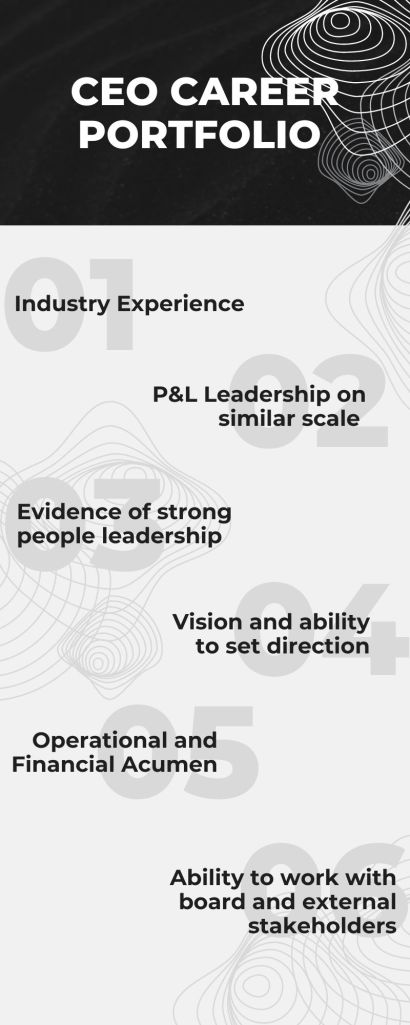
CEO Career Portfolio
If you aspire to develop strong foundations that help you achieve and succeed as a CEO, then here is a checklist of common requirements Elena and Kim have put together in “The CEO Next Door.” You can also explore this post on Developing Executive Thinking.
You can’t have all of them, but to develop a career portfolio with at least five of these areas makes it easier to get on the slate of final candidates.
Resources to explore:
- The CEO Next Door – New York Times Bestseller by Elena Botelho, Kim Powell and Tahl Raz
- Developing Executive Thinking – Article from Bridge to Leadership
- From Junior Consultant to Partner Material – Former Mckinsey Senior Partner Michael Boricki shares life lessons to expedite your career towards executive levels. Subscribe here to watch.
 Bridge to leadership
Leave a comment